
 Kia Sedona: Evaporator Core Repair procedures
Third generation YP (2014-2026) / Kia Sedona YP Service Manual / Heating,Ventilation And Air Conditioning / Heater / Evaporator Core Repair procedures
| Replacement |
| 1. |
Disconnect the negative (-) battery terminal. |
| 2. |
Remove the heater and blower assembly.
(Refer to Heater -"Heater Unit") |
| 3. |
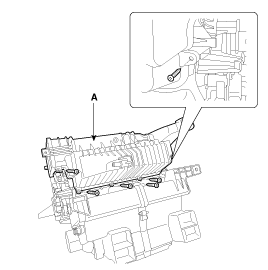
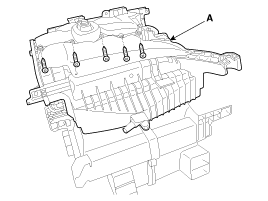
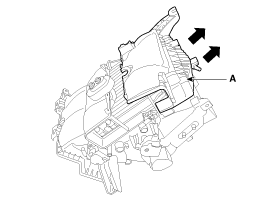
Remove the heater unit lower case (A) after loosening the mounting screws.
|
| 4. |
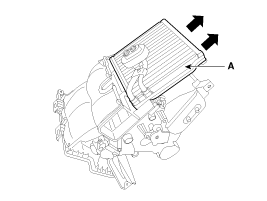
Pull out the evaporator core (A) from the heater unit.
|

| 5. |
Install in the reverse order of removal.
|
 Heater Core Repair procedures
Replacement
1.
Disconnect the negative (-) battery terminal.
2.
After loosening the nuts and bolts, remove the main crash pad and cowl cross bar assembly (A) altogether.
(Refer to Heater - "H ...
 Temperature Control Actuator Description and Operation
Description
The heater unit includes mode control actuator and temperature control actuator.
Located in the heater unit, the temperature control actuator regulates the temperature in the following ...
Other Information:
Description and Operation
Function Of Safety Power Window
When driver door power window auto-up switch is operated, safety function is activated.
1.
Safety function condition
If a force of 100 N or over is detected (usin ...
Description and Operation
Description
Vehicle information systems (UVO) based on state-of-the-art IT systems, safety and security.
The term "Telematics" is a compound word of telecommunication
...
Categories
- Home
- First Generation
- Second Generation
- Third generation
- Kia Sedona YP 2014-2026 Owners Manual
- Kia Sedona YP 2014-2026 Service Manual

Copyright © www.kisedona.com 2016-2026