
 Kia Sedona: Surge Tank Repair procedures
Third generation YP (2014-2026) / Kia Sedona YP Service Manual / Engine Mechanical System / Intake And Exhaust System / Surge Tank Repair procedures
| Removal and Installation |
| 1. |
Remove the engine cover.
(Refer to Engine and Transaxle Assembly - "Engine Cover") |
| 2. |
Remove the air duct.
(Refer to Intake And Exhaust System - "Air Cleaner") |
| 3. |
Remove the battery.
(Refer to Engine Electrical System - "Battery") |
| 4. |
Remove the air cleaner assembly.
(Refer to Intake And Exhaust System - "Air Cleaner") |
| 5. |
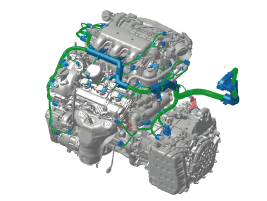
Disconnect the wiring connectors and harness clamps and remove the wiring protector around the surge tank.
|
| 6. |
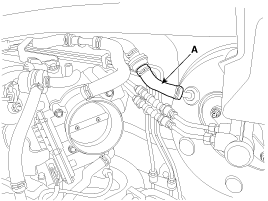
Disconnect the brake vacuum hose (A).
|
| 7. |
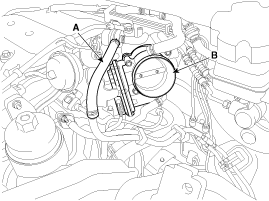
Disconnect the purge control solenoid valve (PCSV) hose (A). |
| 8. |
Separate the throttle body (B) from the surge tank.
|
| 9. |
Disconnect the positive crankcase ventilation (PCV) hose (A). |
| 10. |
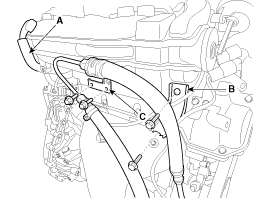
Remove the surge tank stay (B).
|
| 11. |
Remove the power steering pressure hose clip (C) from the surge tank. (With HPS)
|
| 12. |
Remove the surge tank (A).
|
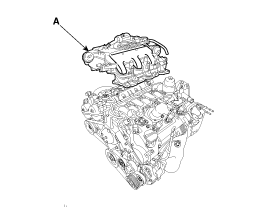
| 13. |
Install in the reverse order of removal. |
 Surge Tank Components and Components Location
Components
1. Surge tank stay2. Surge tank
...
 Intake Manifold Components and Components Location
Components
1. Intake manifold
...
Other Information:
Rear Heater Core Repair procedures
Replacement
1.
Disconnect the battery negative terminal.
2.
When the engine is cool, drain the engine coolant from the radiator.
(Refer to Engine Mechanical System - “Coolant”)
3.
Rem ...
Transaxle ranges
The indicator in the instrument cluster displays the shift lever position when
the ignition switch is in the ON position.
P (Park)
Always come to a complete stop before shifting into P (Park). Thi ...
Categories
- Home
- First Generation
- Second Generation
- Third generation
- Kia Sedona YP 2014-2026 Owners Manual
- Kia Sedona YP 2014-2026 Service Manual

Copyright © www.kisedona.com 2016-2026